
Platinum
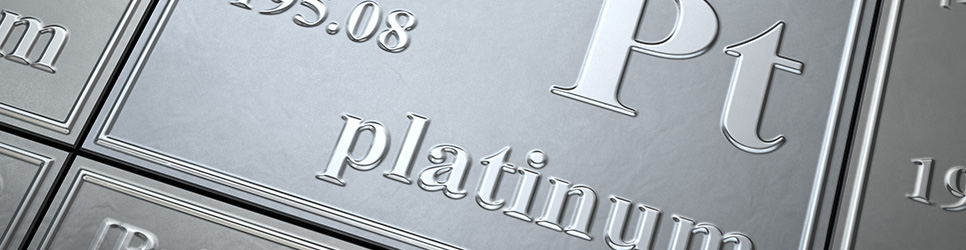
Investors have generally focused on gold and silver when seeking to diversity their investment portfolios. However, there are several reasons to consider adding platinum to the mix of precious metals in one´s portfolio to enhance performance even further.
Platinum and palladium are considered sister metals and are often times mined together. They both have a very high melting point of 3,215 degrees F and are uniquely qualified for many high tech applications.
The two main factors that investors can look to for platinum price appreciation are:
1. Platinum´s Scarcity – World platinum output is less than 1/15th that of gold. It takes roughly 8 tons of raw ore being mined to produce just one pure ounce of platinum. The two countries that produce nearly 90% of the world´s platinum, South Africa and Russia are very unstable politically and economically. Any disruption from one of these two primary sources of supply would be a catalyst to propel the prices of platinum much higher. Unlike gold and silver, there are no significant overhangs or large stockpile of platinum to meet demand, if a serious supply situation were to occur. The platinum market has been in supply deficit for many years running, and a similar situation is anticipated through the year 2018. So if “precious” is measured in terms of scarcity, platinum is the most precious of them all.
2. Platinum´s Growing Demand – Platinum demand has grown an average of over 5% per year throughout the last 10 years. Of the five million ounces of platinum that are used each year, the two main usage groups are jewelry fabrication (40%) and catalytic converters (34%) used in automobiles.
The rise in popularity of platinum jewelry over the past two decades has been remarkable. Japan has long been a traditional source of platinum jewelry demand, but double digit growth rates over the past several years in both China and North America now make these two markets highly important. Combined they count for over 40% of world total platinum jewelry demand. Platinum is prized the world over for its understated elegance and its tensile strength, making it the most secure precious metal for setting precious stones.
Platinum is known as “high-octane gold”, for its stronger price moves and prospects for a higher upside. Buying platinum is an easy way to invest in worldwide economic growth because the metal is essential to the economies of many industrialized nations.
Pure platinum legal tender bullion coins provide a liquid, convenient and reliable way to invest: the Platinum American Eagle, Australian Koala, Canadian Maple Leaf, Isle of Man Noble and Chinese Panda.
All coins are 99.95% pure and are available in one-ounce and fractional sizes. Investment-grade bars are also available in 10-ounce and smaller sizes from various refiners.
Precious metals have long been recognized for their tendency to appreciate when other financial instruments, like stocks and bonds are declining. Savvy investors, however, are not content with just securing their assets against inflation and other economic dangers. They also demand the opportunity for capital appreciation. Platinum’s unique fundamentals offer investors both: The ability to hedge against uncertainty and the potential for profit.
Platinum’s supply/demand fundamentals are tight. In fact, were platinum mining to cease today, above ground reserves would last less than one year. In contrast, gold reserves would last nearly one quarter of a century. Platinum’s supply is tight even during periods of relatively normal mining production.
New clean air legislation in the United States (Tier II Emissions Standards) and in many of the world’s fastest growing economies is significantly increasing the total amount of platinum group metals used in automobiles.
Platinum is used in a rapidly increasing array of products, from industrial refrigerators to spark plugs. The small amount of platinum used in each product means that the firms that manufacture them and the consumers that buy them are relatively insensitive to significant increases in the price of platinum.
Investment demand by individuals around the world is rising. Many are attracted to the vastly improving fundamentals in the platinum market. In rising markets, platinum normally develops a significant premium over gold. Platinum has historically tended to be more expensive than gold because it is considerably rarer and has more extensive and irreplaceable applications.
Catalytic converter platinum consumption in developing nations is becoming an increasingly important factor for the platinum market. Much of the world runs on diesel, a fuel that works best with platinum catalysts as opposed to palladium catalysts. Countries that, two decades ago, might have had little if any environmental legislation, now have restrictions on auto pollutants in place. While there has been some loss of automotive catalytic converter market share to palladium that resulted from shifts made when palladium traded at $130, current palladium prices (now near par with platinum) have reversed this trend back toward platinum usage. Implementation of Tier II standards in North America and requirements for diesel engines in Europe will bring further growth in platinum demand.
Catalytic converter legislation is spreading quickly in Latin America. In the past five years the nation with the largest economy in the region, Brazil, and the nation with the fastest growing economy, Chile, have both passed legislation mandating catalytic converter use.
Hong Kong, Malaysia, Singapore, Taiwan and Thailand all have passed legislation enforcing domestic catalytic converter use before the end of the decade.
Auto sales in Latin America and in the emerging market economies of East Asia have grown rapidly in recent years. It is estimated that in the coming 10 years, platinum consumption for catalytic converters in emerging-market economies will surpass the total now consumed in North America, Japan and Europe.
The many other industrial uses of platinum are best summed up by Nina Lipton, Director of Market Research for the Platinum Guild International:
“You may not realize it, but platinum is literally all around you! Over 20% of all consumer goods either contain platinum or are produced using platinum. Eyeglasses, pacemakers, unleaded gasoline, polyesters, colored paints, jet fuel, many pharmaceuticals, lasers, plastics, fine jewelry pieces, explosives, endoscopes, light and oxygen sensors, fuel cells, some anti-cancer drugs, pollution control devices for autos and industry, even the fiber optic-based information super highway, and countless other goods all rely on platinum.”
PLEASE CLICK HERE OR GO TO OUR PRODUCTS PAGE FOR RECOMMENDATIONS OF BUYING PLATINUM